
Parallel Structure: The Pickup in Eddie Van Halen’s Frankenstrat on Van Halen’s First Album
Now for Something Different. A Look Back Before Looking Forward Again.

Now for something different.
A look back before looking forward again.
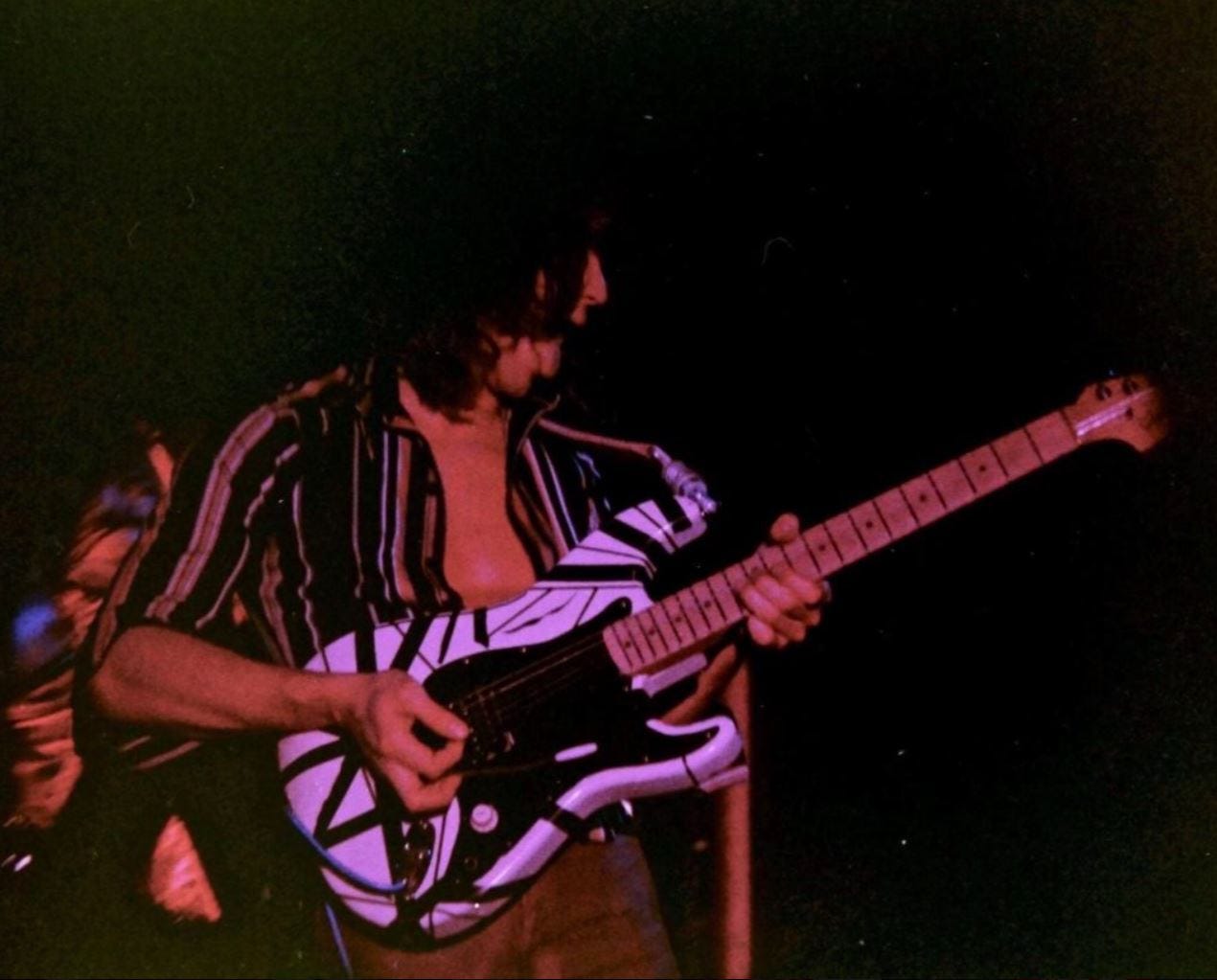
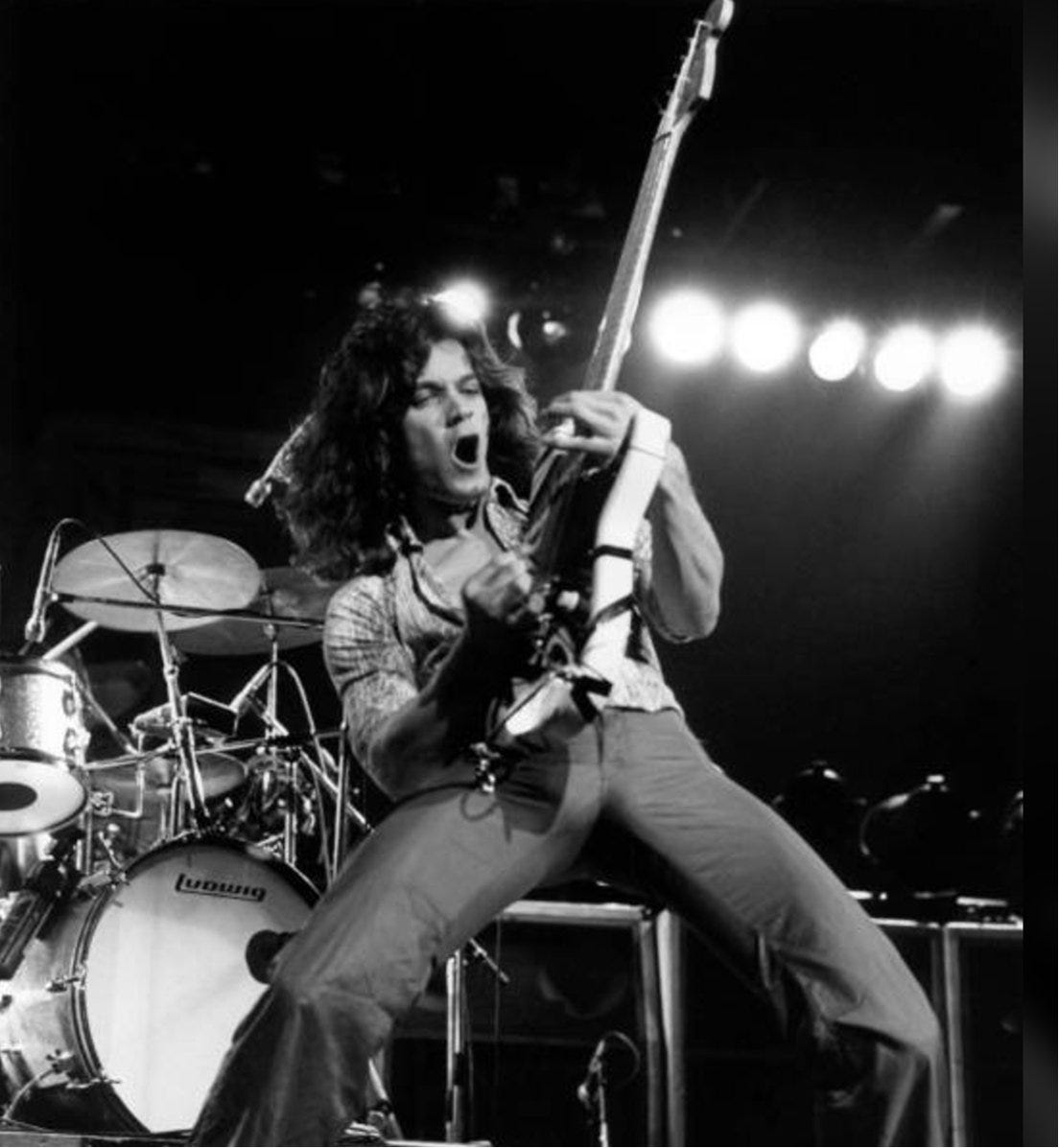
Below is a picture of Eddie Van Halen in December 1977, with a decent representation of the famous Frankenstrat in an early white/black stripes incarnation. Maybe the very guitar and pickup that he used on Van Halen’s first album recorded three months earlier, though, to me, it already looks modded from the recording session.
All of the following is how it went down, logically, according to my studies, my pickup winding, guitar building and amp repair experience, and how my brain works.
The pickup was a Gibson PAF pickup, perhaps from an early Gibson ES-335 that Eddie ruined experimenting with it.
The pickup broke before the first album, meaning it stopped making sound earlier in 1977. He tested the coils, and one was dead.
Instead of throwing the pickup away, he decided to fix the pickup and make it hotter, with more power, for the album. He used other pickups in the guitar while he worked on that one PAF pickup.
Since he had wax potted the pickup, the pickup could not easily be unwound to find the break in the coil wire.
Maybe he heard the Duncan Distortion or some other newer pickup was wound with thinner wire, and maybe he liked that idea because he could put more winds on it for, in his view, more power, or more edge, more cut.
Just more.
So, he completely rewound the dead coil by hand, but stuffed as much 43awg Plain Enamel wire as he could fit on the coil. This was thinner wire than the 42awg Plain Enamel wire used in vintage Gibson PAF pickups, including the unbroken PAF coil for Eddie’s pickup.
Eddide unintentionally installed the repaired coil in a manner that put the coils in parallel rather than in series. Series is typical for humbucker pickups.
Below, the highest resoluion picture I have of the repaired pickup in Eddie’s Van Halen I black/white guitar at a late summer 1977 Magic Mountain show within weeks of the recording session.
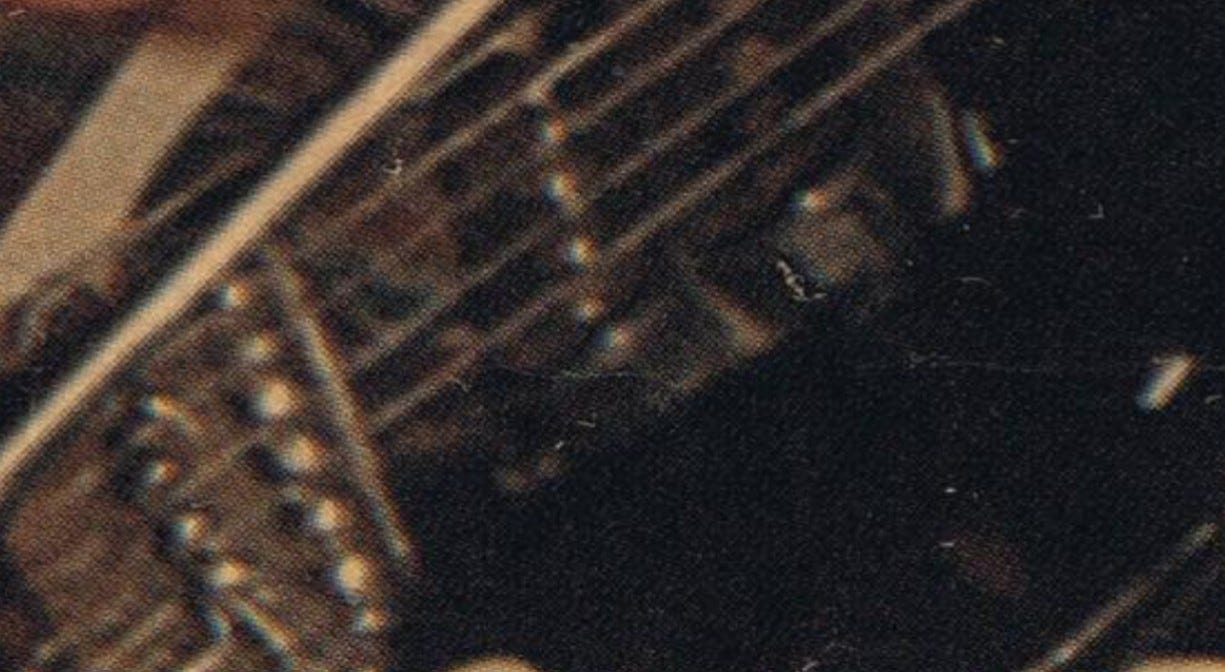
Parallel coils are still humbucking but have a more wiry, less full, more detailed and touch-sensitive sound than the Series orientation. I also hear a lifted shift in the mids that is oddly more textured than when in series.
For a novice working to put back together an original Gibson PAF, it is remarkably easy to accidentally solder the finish of the new coil directly to the baseplate ground along with the other coil’s start, accidentally creating a parallel circuit.
Think about putting this back together. No internet. No AI. Just you and the mess you made.
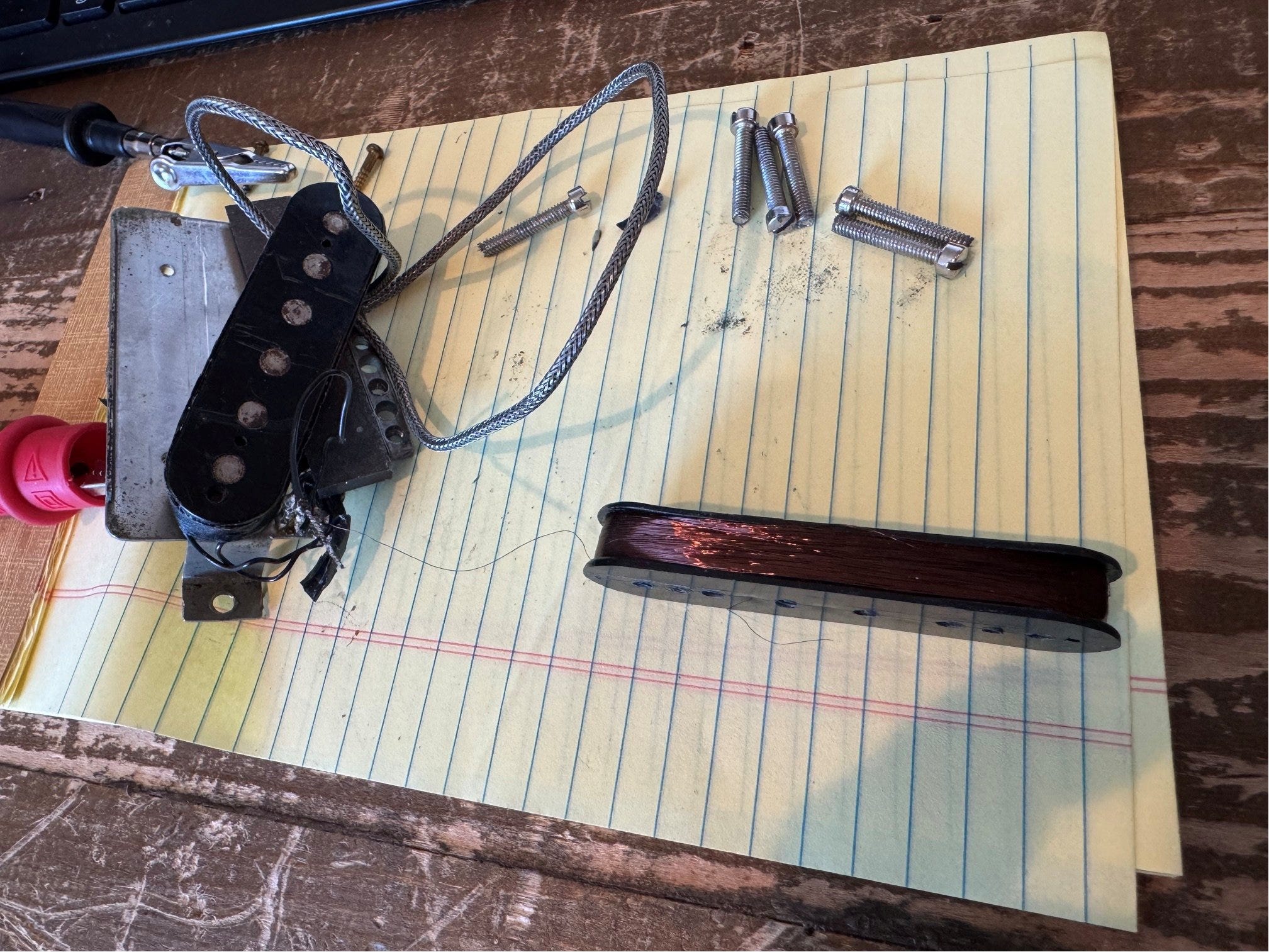
In any event, that asymmetrically wound parallel-circuit modified PAF pickup carried him through the years, in and out of guitars and it may have changed some.
On that first album, the tone was different, and in the recording of a couple live shows played in 1977 around the time of the recording, that same tone was in evidence.
When Suhr measured it in the late 1980s, he said it was such a low reading, but it wasn’t a single coil sound. They thought that one coil had shorted.
Well if it really shorted, the coil would likely not work at all, but that was not the case. It could also naturally short in a way that makes the circuit parallel rather than series.
If the pickup had survived with no further modifications from 1977 to the late 1980s, I would think what they really found was the humbucker circuit was in parallel.
This, from way back when Eddie did it himself when he knew very little about pickups, would explain the extremely low DC resistance reading.
“Nobody taught me how to do guitar work: I learned by trial and error. I have messed up a lot of good guitars that way, but now I know what I’m doing, and I can do whatever I want to get them the way I want them. “- Jas Obrecht November 1978 EVH Interview
So I wound a pickup like according to the formula.
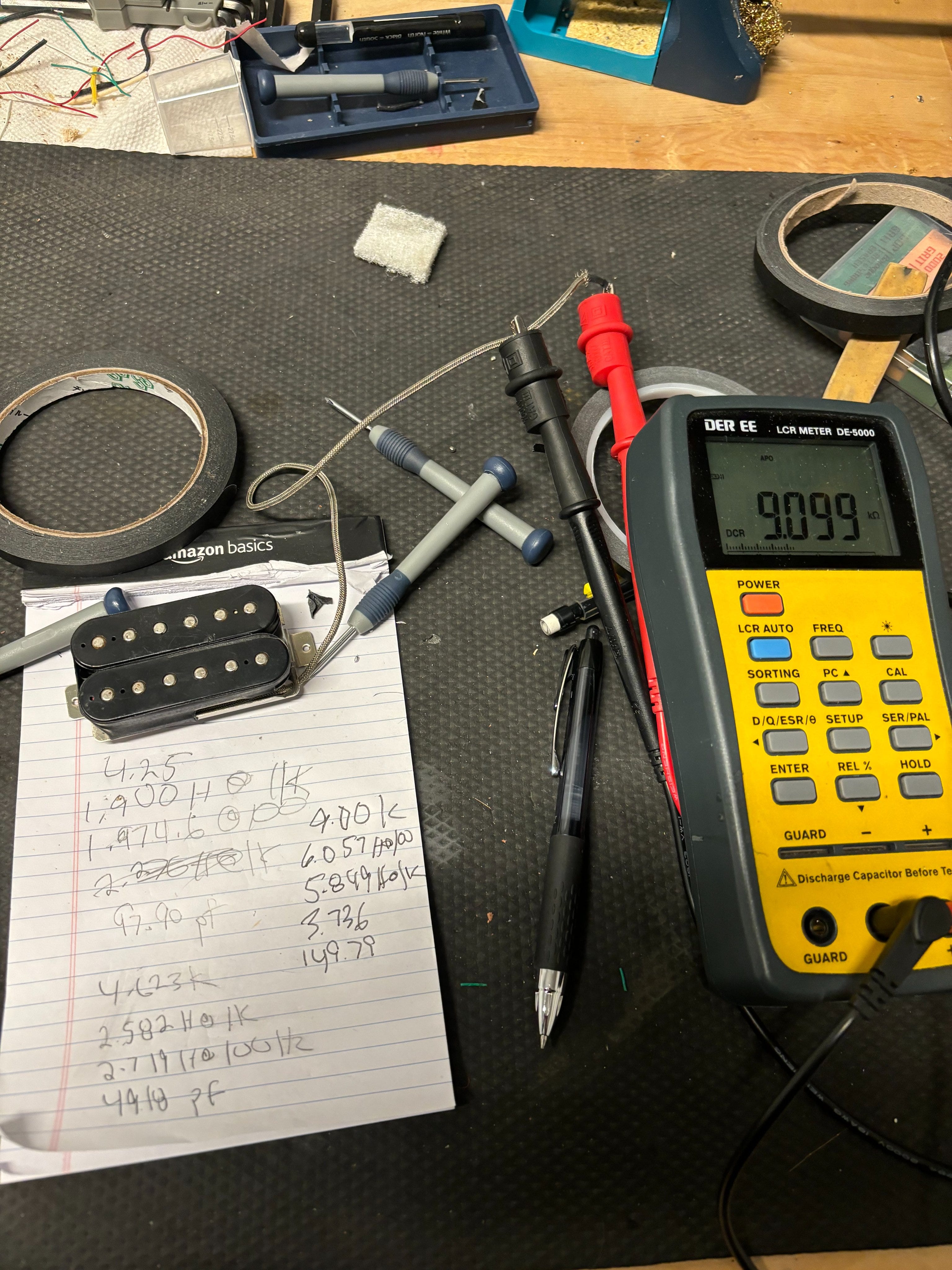
I took the cover off to put it in the guitar, but you can see my scratch, screw coil at 7.66K DCR with 43awg wire and slug coil at 4.36K with 42awg. Total DCR 12.16 at a hot garage workstation calmed down to 11.9K.
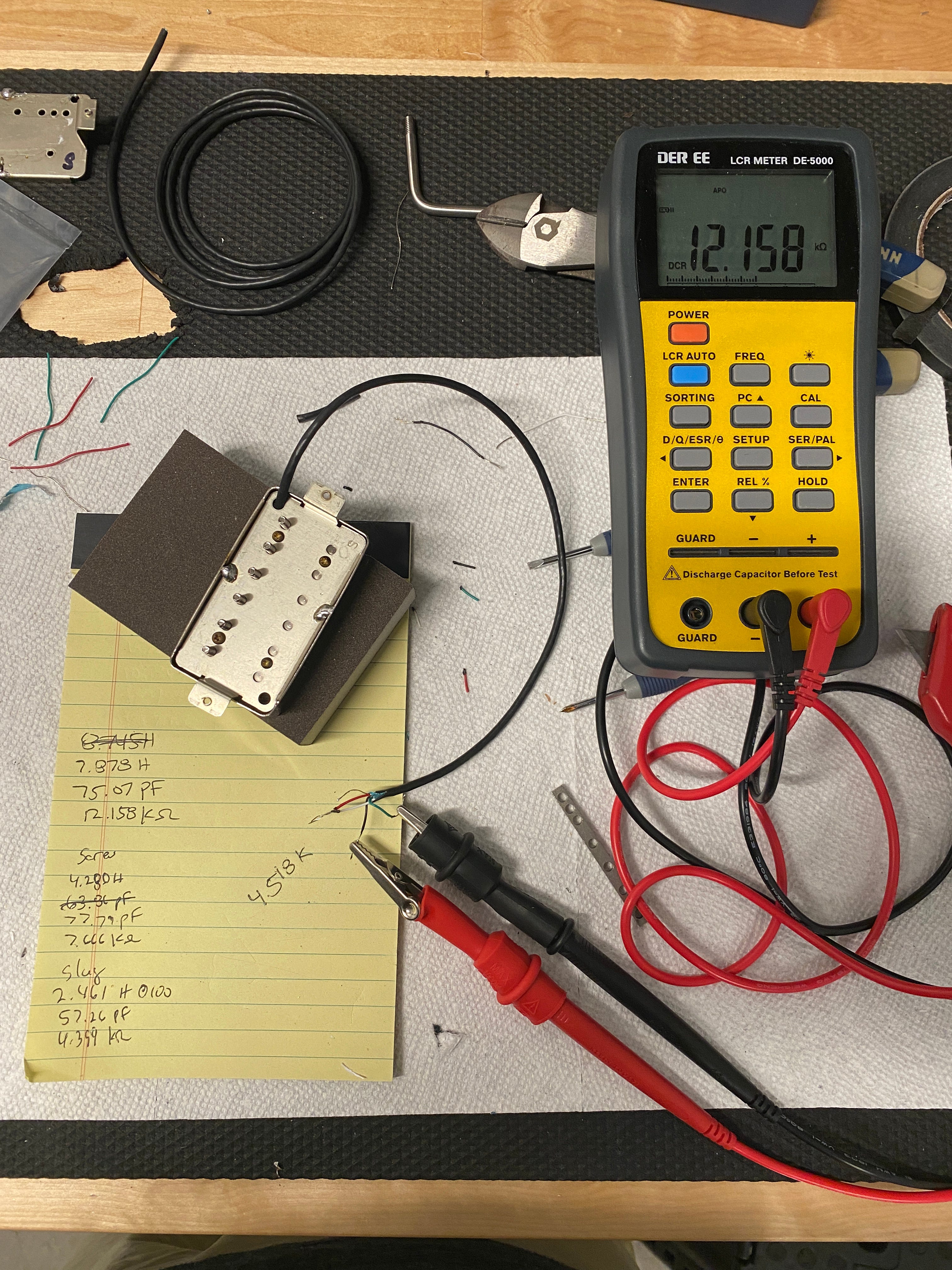
I bolted that asymmetrically wound pickup at an EVH slant in an ash body flatsawn two-piece maple neck strat-type guitar with vintage tremolo.
I did that with 4 conductor wire so I can put the pickup on a series/parallel switch.
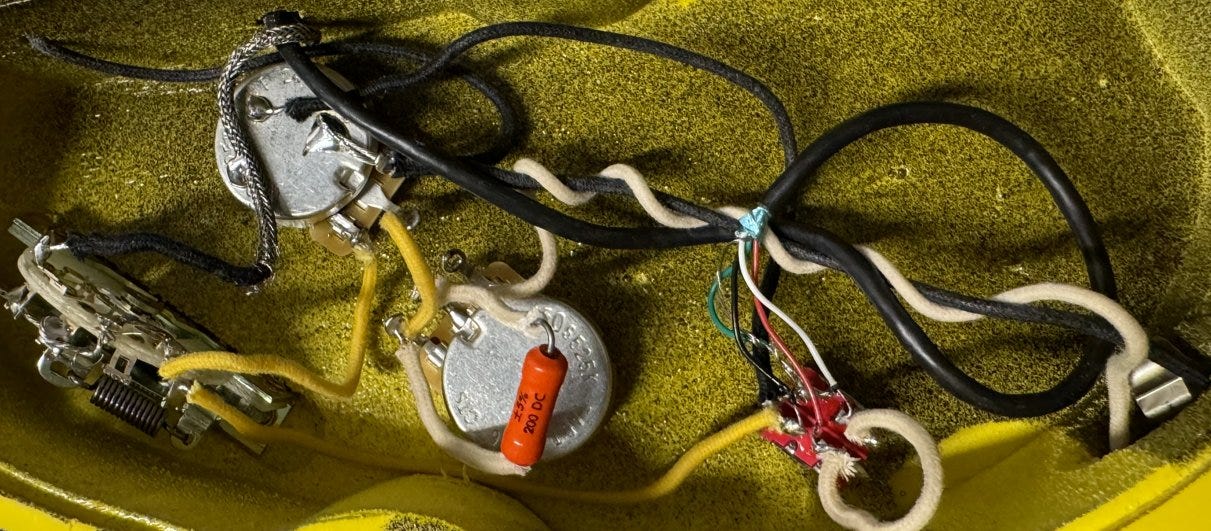
Yes, I do believe he had two knobs on his guitar at the time of VH1, and a tone pot was in the circuit. I put that on a switch too - tone pot in, tone pot out. Tone pot out just did not sound right up high.
Here is the guitar with two white strat guitar control knobs on August 1977, just weeks before Eddie entered the studio to record VH1.
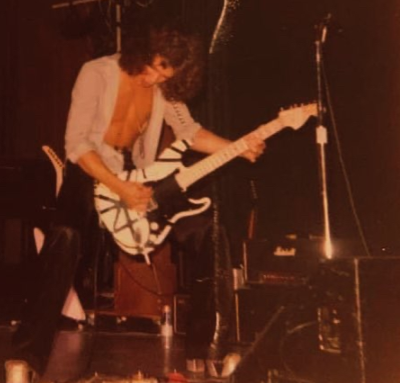
Also, it is easier to leave the tone knob in the circuit if a novice does not really understand the circuit. Perhaps this was the case with Eddie. Later he had a tone knob hidden in the control cavity of his famous Bumblebee guitar.
I wound so many pickups in so many different ways but this pickup/guitar configuration convinced me that the parallel asymmetrically wound pickup described above is the right first album sound, at least on songs where Eddie used the Franky.
In fact, for my benchmark, I have been using the live sound from two shows bracketing the recording session that essentially the exact tone of the album. But never heard again.
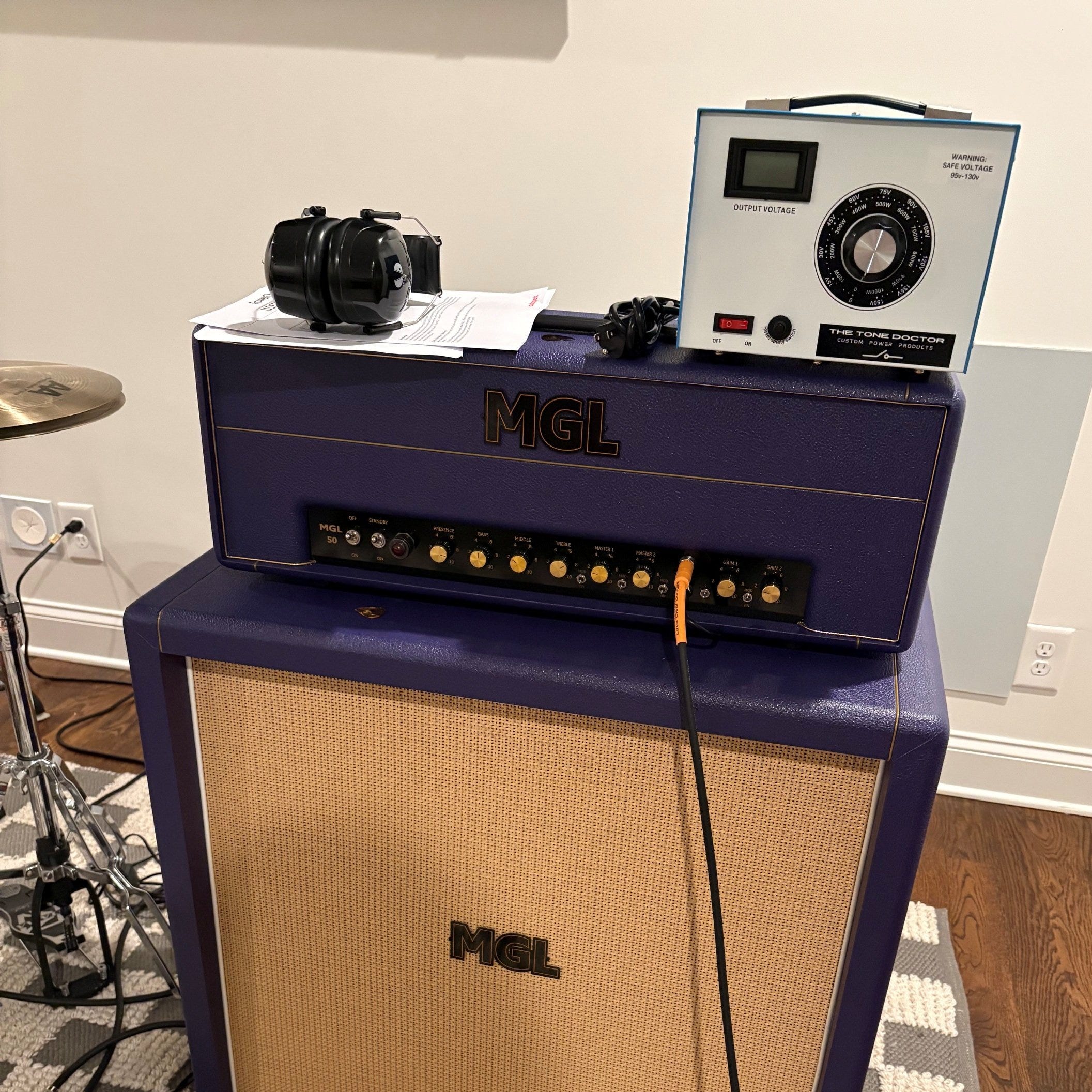
When I switch series to parallel on that switch with that asymmetric pickup while playing very loud through a Marshall style MGL50 amp and 4x12 with vintage 1967-68 20 watt Celestion G12M speakers, the change in tone is very apparent and immediately recognizable.
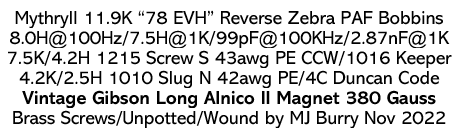
Full pickup specs on the label.
The vintage Gibson magnet had degaussed and gotten a little weaker over time for some reason.
November 1978, little over a year after the recording of the first album, Jas Obrecht’s famously interview Edde for his story, “Heavy-Metal Guitarist form California Hits the Charts at Age 21.”
“I’ve also recently bought a Charvel Explorer-shaped body and put a Danelectro neck on it and an old Gibson PAF pickup. And I also found a 1952 gold-top Les Paul. It’s not completely original-it’s got a regular stud tailpiece in it, and a Tune-o-matic bridge. I have rewound Gibson PAF pickups in it, too. I use a Les Paul for the end of the set because my Charvel is usually out of tune, and the Les Paul’s sound is a little fatter. “ - Eddie Van Halen
Eddie mentions rewound vintage Gibson PAF pickups in this and other interviews. That make no sense if he means fully rewound. Taking all the magnetic wire out of the pickup, then rewinding with new wire is actually insane.
There is no reason to obtain the PAF pickup in the first place with such a plan, as the sought-after tone is mostly in that wire, how it was made, and how it was originally wound.
But Eddie really was looking out for more old PAF pickups, chasing some sound. Jas Obrecht interviewed Eddie Van Halen again in 1979, as below.
Jas Obrecht: What other pickups did you try?
Eddie Van Halen: That’s about it. I’d do anything to get an old P.A.F.
Jas Obrecht: An old Gibson P.A.F.?
Eddie Van Halen: Yeah, they’re the best.
Jas Obrecht: I’ll keep my eye to the ground. I run across them every once in a while.
Eddie Van Halen: They go for 100, 200 bucks apiece, but that’s what I use, that’s what I like. A lot of people don’t like ’em. See, with my setup, it’s matched. If I play my guitar through someone else’s setup, it won’t sound right. If I use someone else’s guitar through my setup, it won’t sound right.
So, he acquired PAFs, keeping both the slug coil bobbin stock and the rest of the pick-up stock but rewinding the screw coil hotter with 43awg wire.
Maybe he liked the sound of that first one he did, so tried to do it to other PAFs, with varying results since Gibson PAFs were not all standardized well. Maybe his asymmetry mod turned out great, and he knew he would need more to keep his sound and his secret. I’m not sure.
I had built 4 EVH-style guitars for testing different pickups spec’d according to various EVH pickup theories. For instance the old Dimarzio Distortion pickup in the black one has an Alnico 2 PAF magnet and also had one coil rewound.
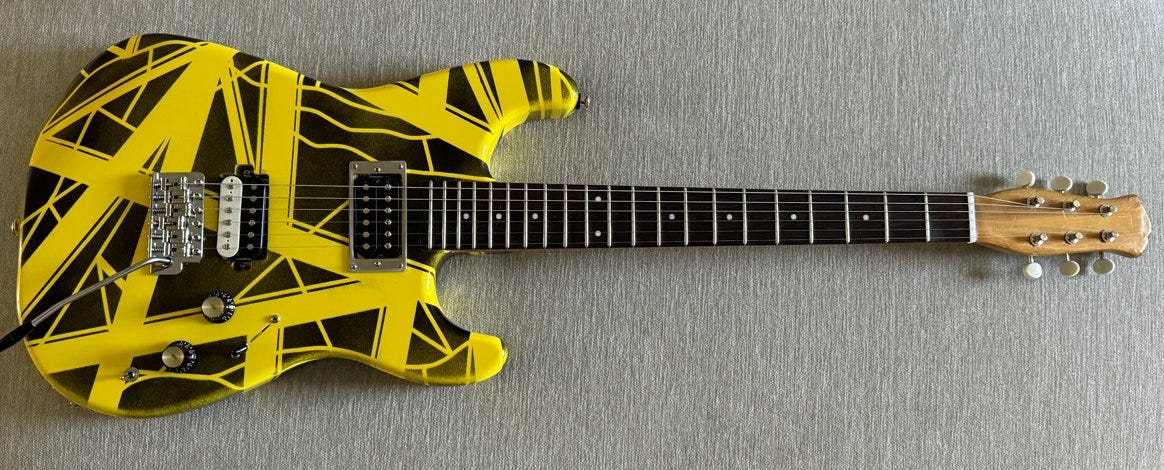
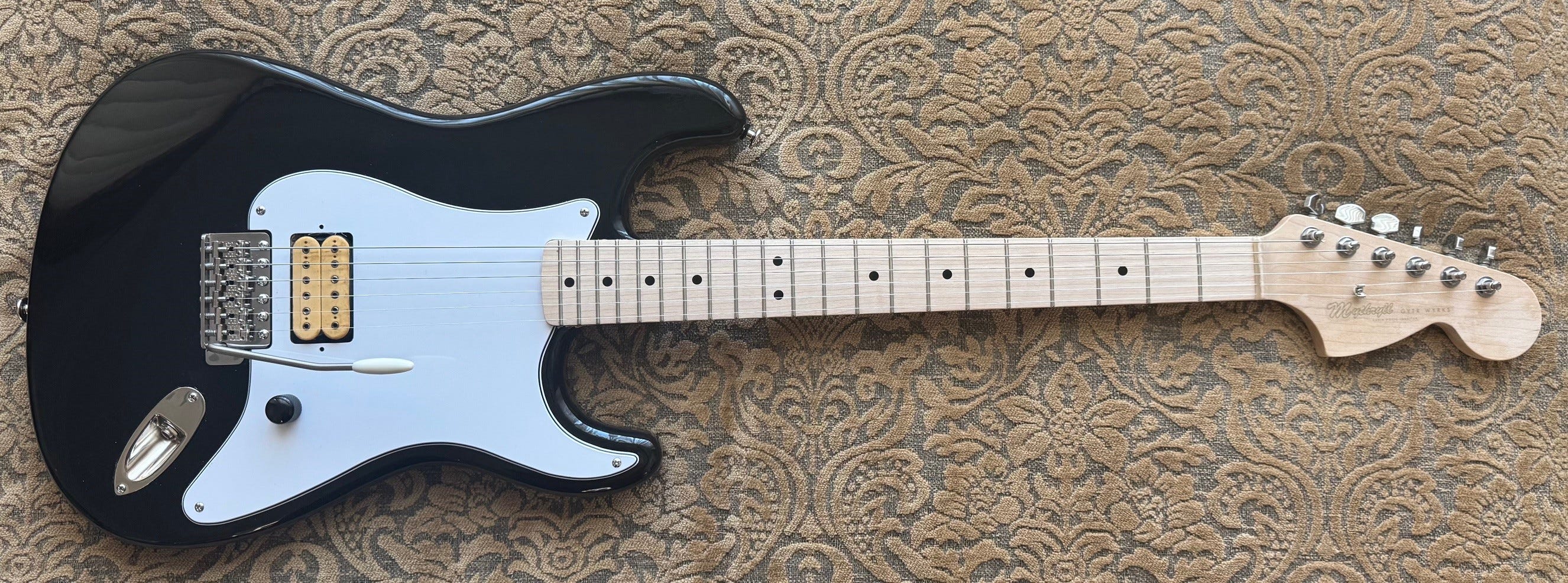
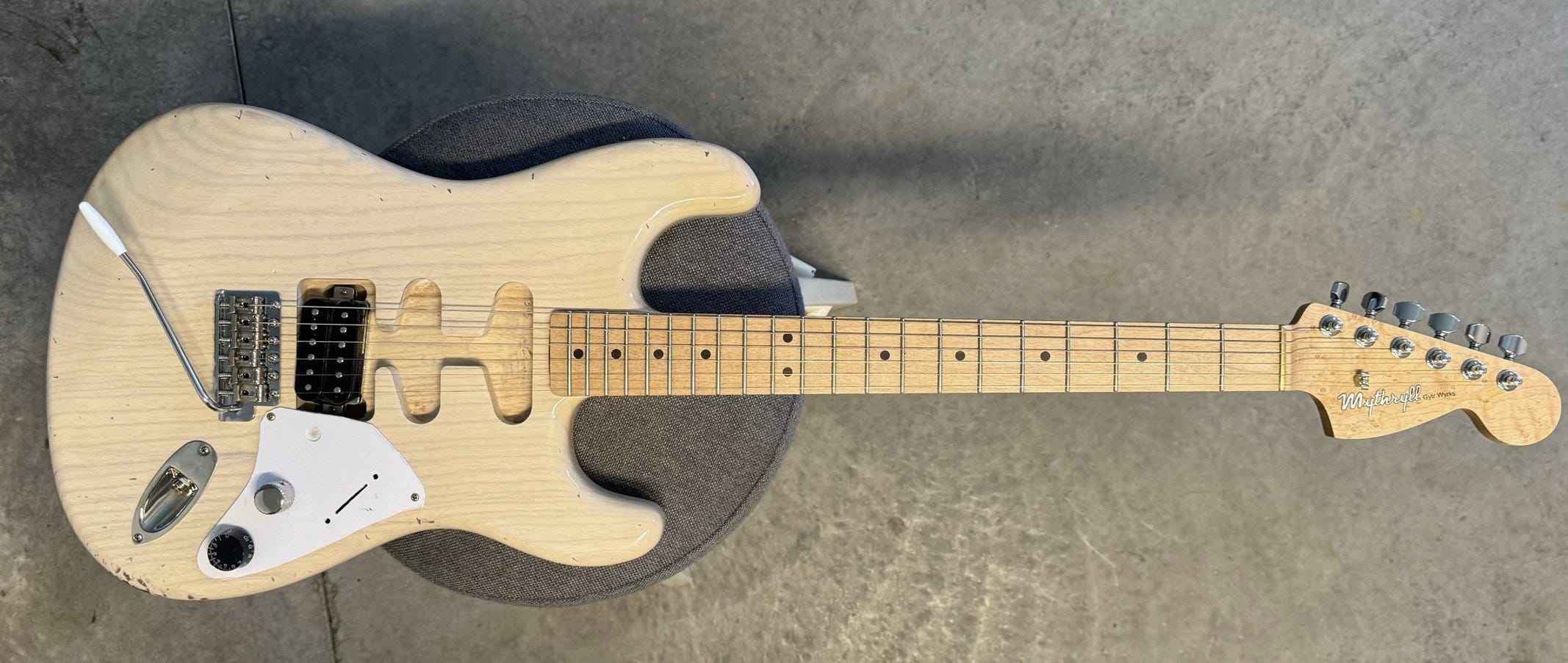
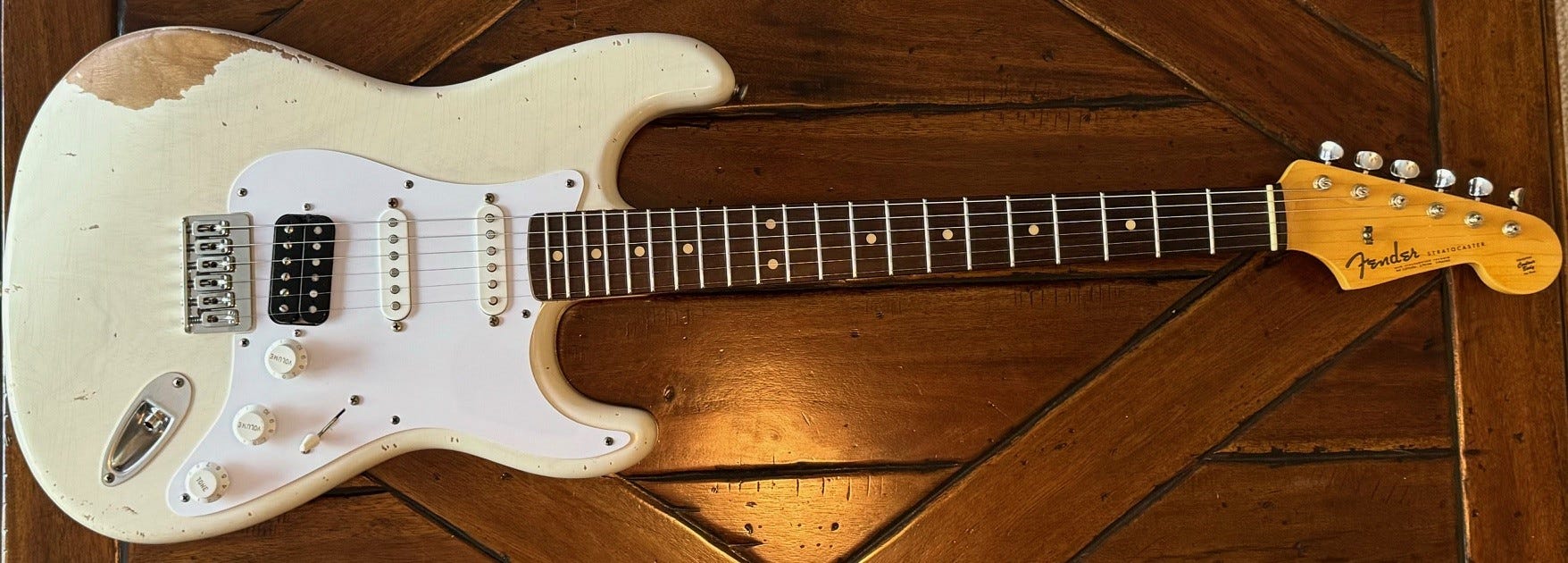
The Bumblebee-ish guitar has a vintage 1960 Danelectro neck with a thick steel bar running its length to keep it straight. The neck therefore is not adjustable. Luckily it is perfectly straight after all these years, and never moves.
This neck has a flat 14” radius and a comfortable back profile, and was popular with both Eddie Van Halen and Randy Rhoads.
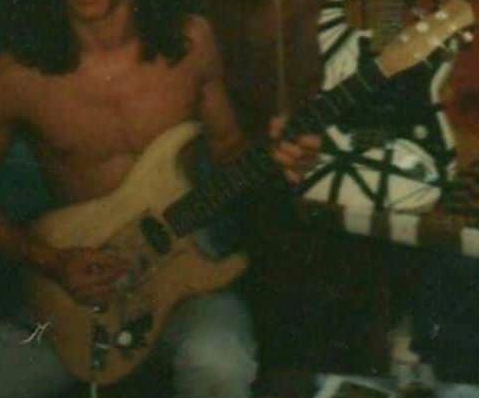
Here is Eddie with one of his stripped down Stratocaster guitars with the Danelectro neck in late 1978.
The neck was also seen in the studio on probably the same stripped down Stratocaster body during the recording of Van Halen’s second album in late 1978.
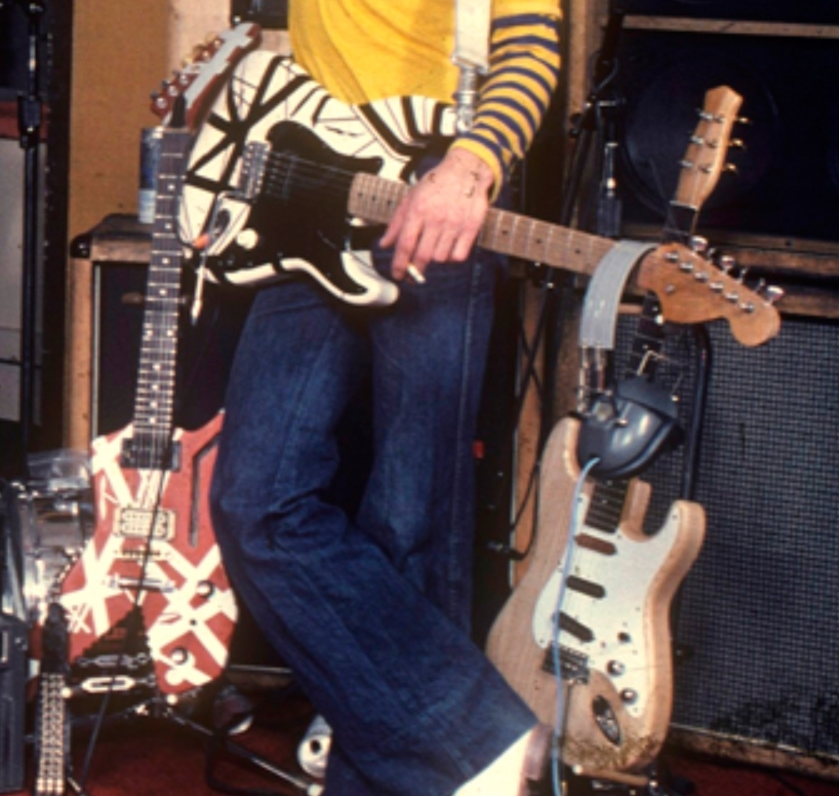
Rumor has it that it was used to paly the intro on Women in Love.
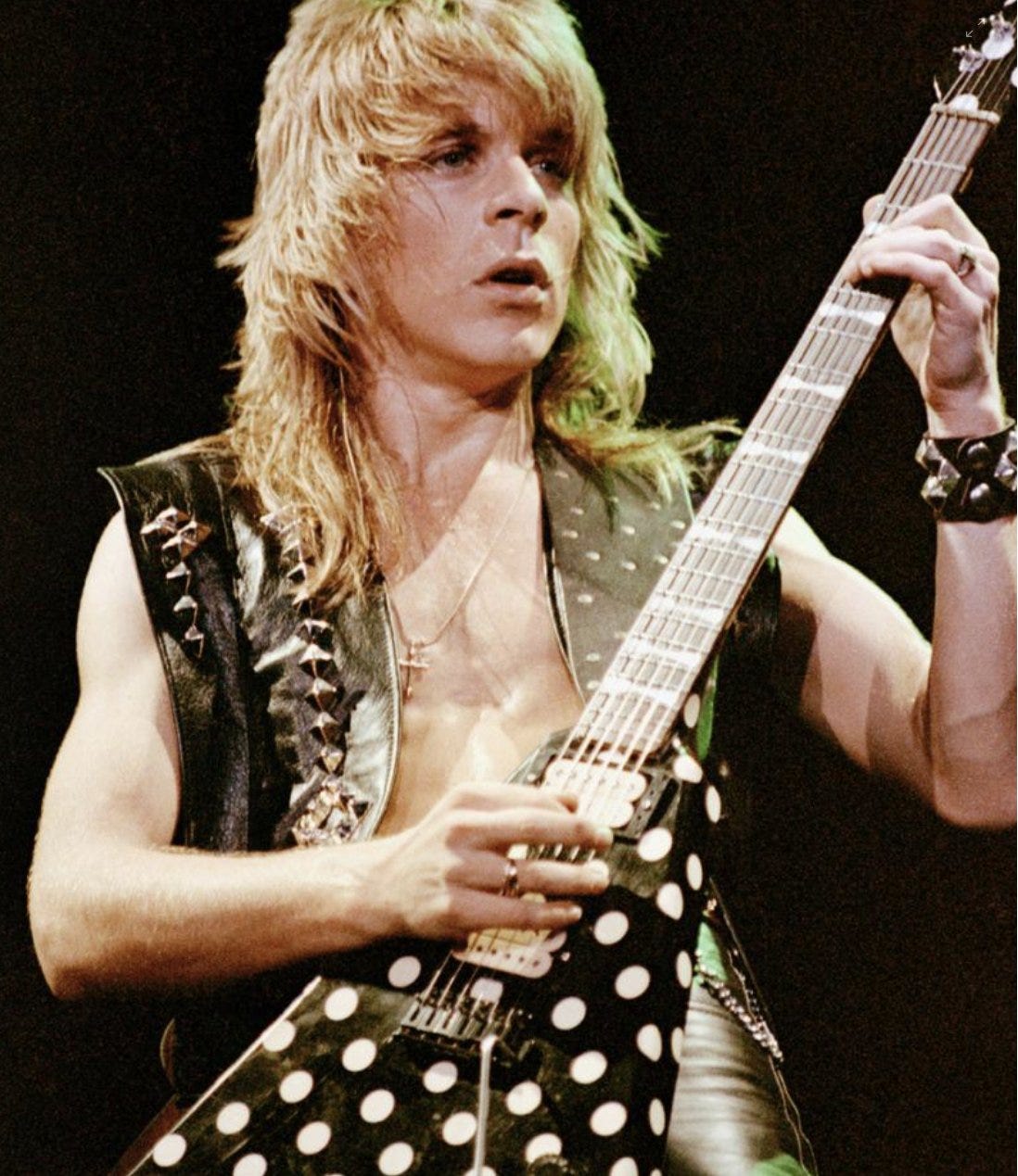
Lesser known is that Randy Rhoads famous Sandoval Polka Dot guitar’s neck is a 1960s Danelectro neck that was heavily modified with bow tie inlays and a rebuilt headstock. The heel was also modified to be used as a glued-in set neck instead of a bolt-on neck. You can see that very flat 14” radius in this picture of the GOAT playing his Polka Dot.
If you are thinking, dang that must be a special neck, that is what I thought some years back and is why I sought one out to try on a guitar.
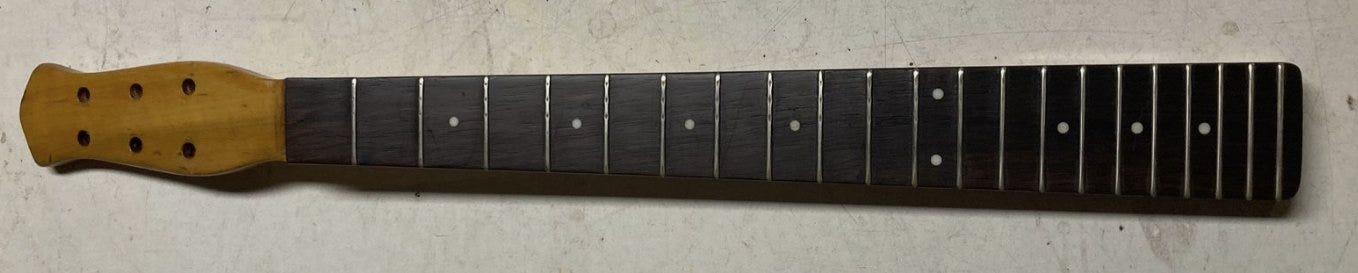
And it really is a great-sounding neck, once wrangled into the neck pocket, which had to be modified just a bit due to the neck’s 25” scale instead of the Fender/Charvel standard 25 1/2”. It sounds very clear on all strings up and down with no dead spots. In fact, the neck rings a good long time.
I have also had an EVH Wolfgang guitar, Peavey EVH guitars, EBMM EVH guitars, and I had the original signed aged Frankenstrat pickup (1 of 400) signed by Eddie himself.
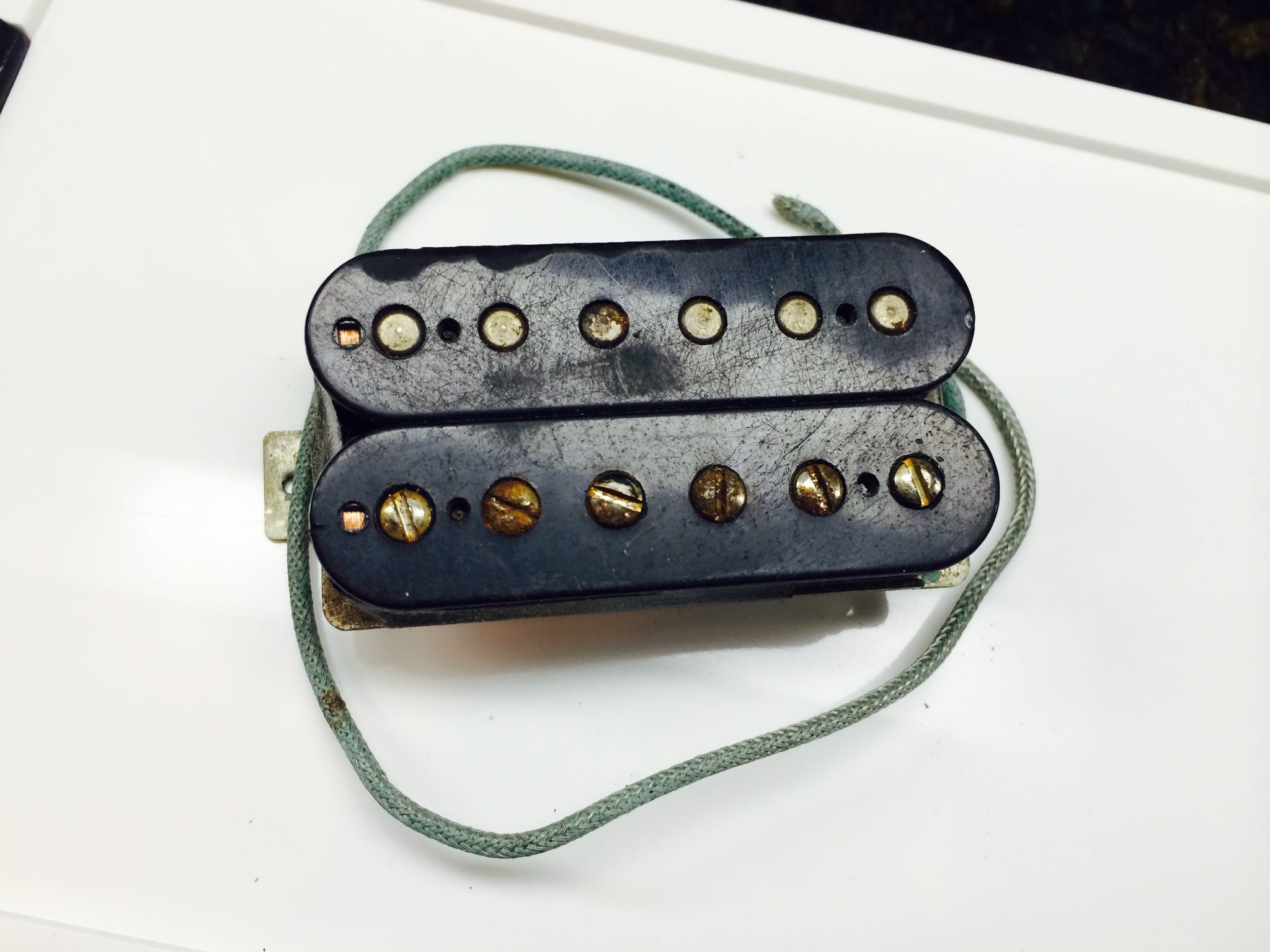
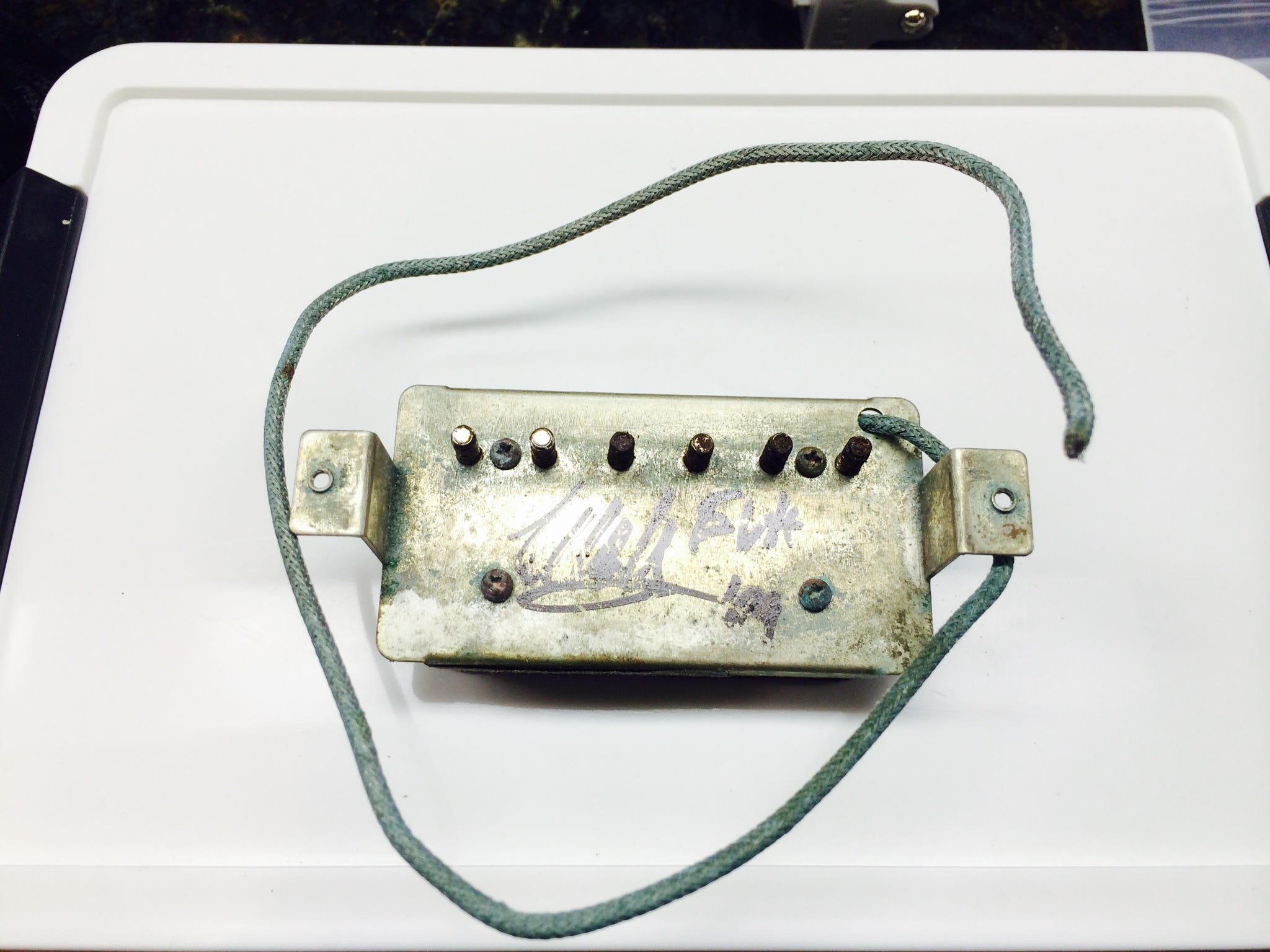
I also tried aftermarket EVH-style pickups, and the Duncan 78 model.
All great pickups, and the relatively small guitars generally were very easy to play. Nothing special. And not parallel.
Purchased a 1977 Ibanez Destroyer with stock pickups to try that out. Some think EVH used a guitar like this, maybe with stock Super 77 pickups, maybe not.
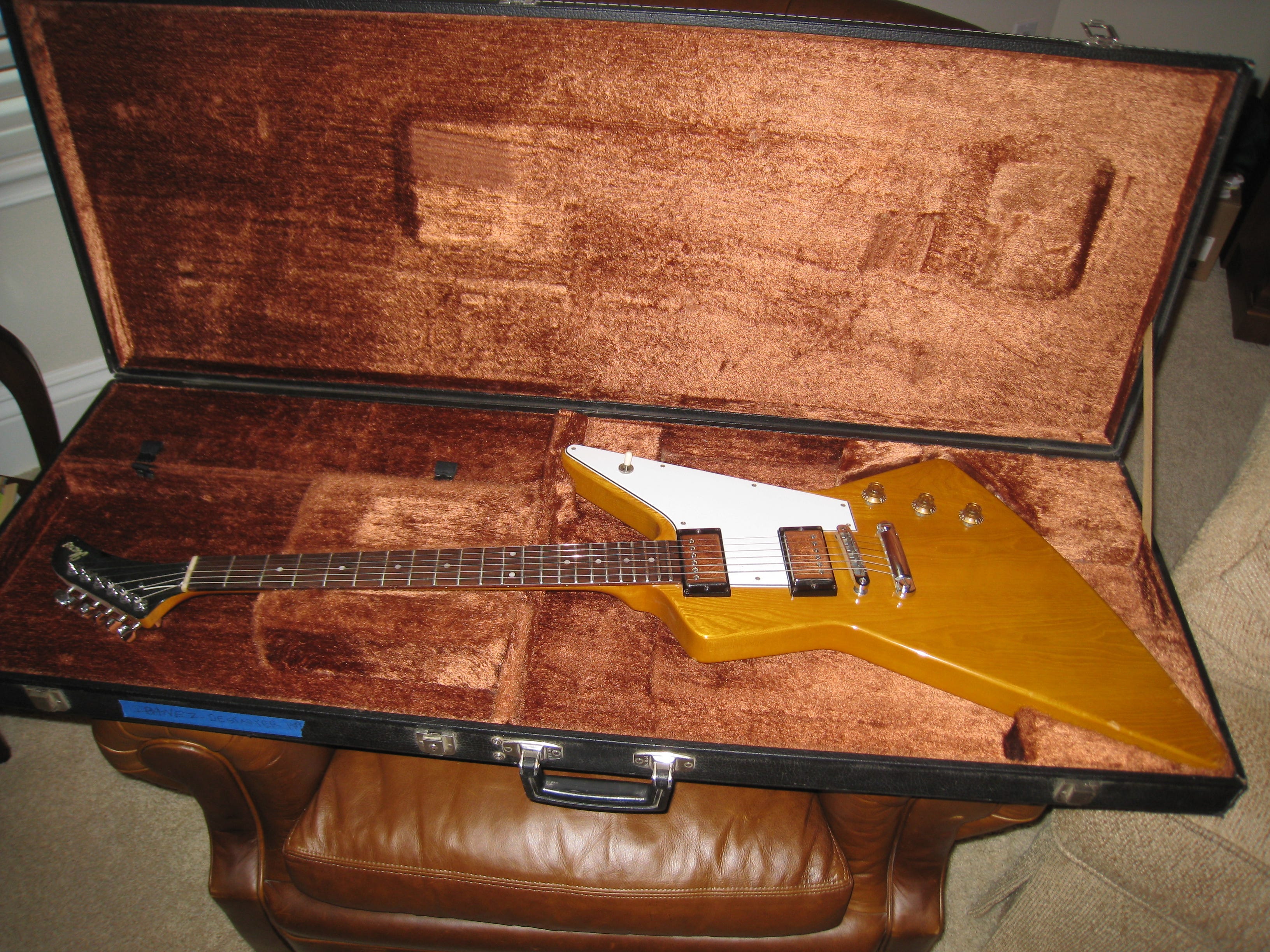
The Destroyer had a distinctive sound, and was not such an easy player.
I thought this Hamer Korina (not Sen, of course) Standard was a better player with far better sound.
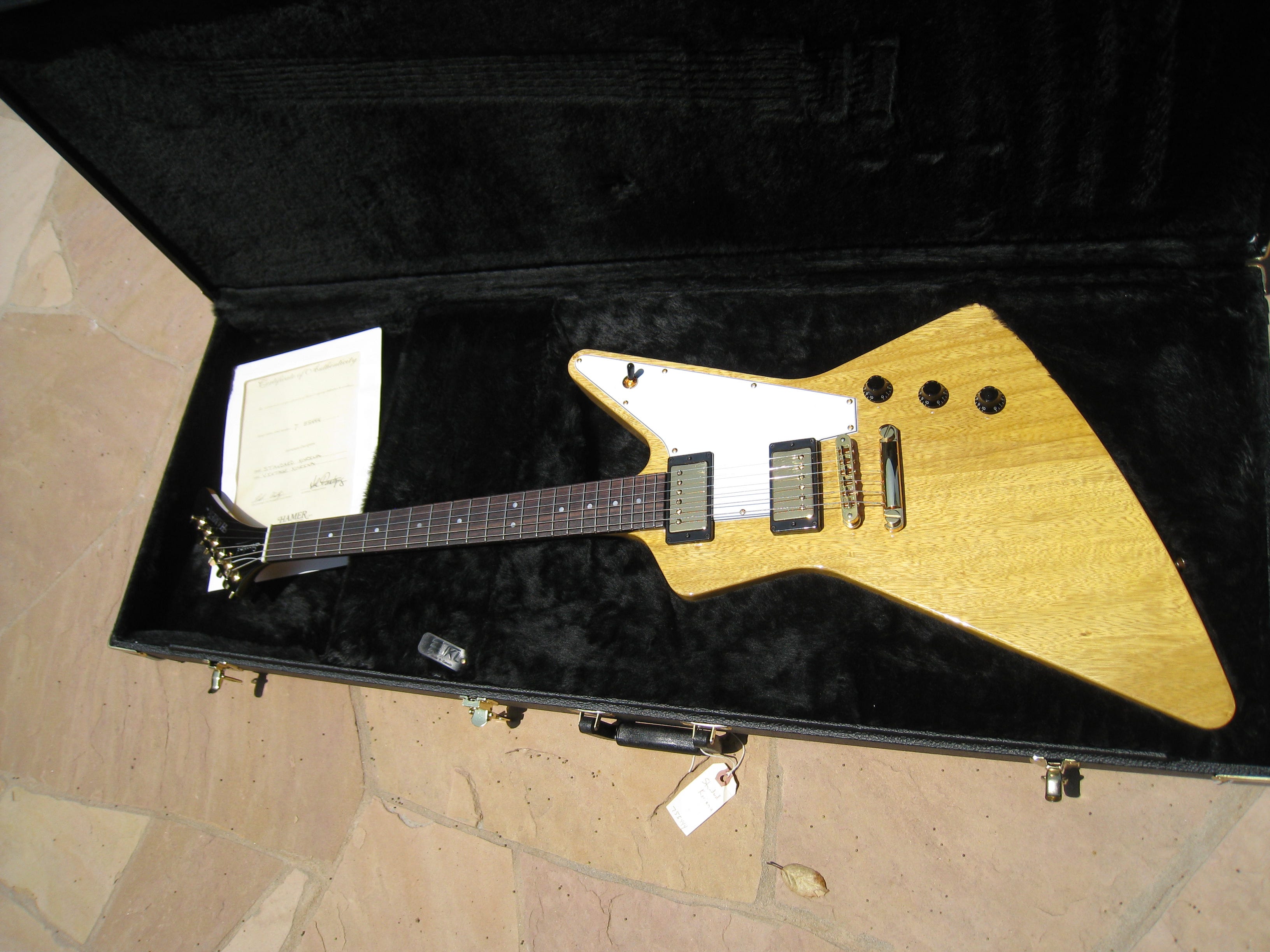
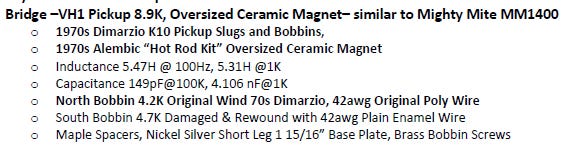
Playing around with 70s style pickups Eddie might have used, I wound my own version of the Super 77 pickup, as well as my own version of the Mighty Mite 1400.
I found 1970s Alembic Hot Rod kit on the theory that Eddie would have used it somewhere. It is mostly just a giant ceramic magnets. I used it in the MM1400 clone, which sounds very raw, wild.
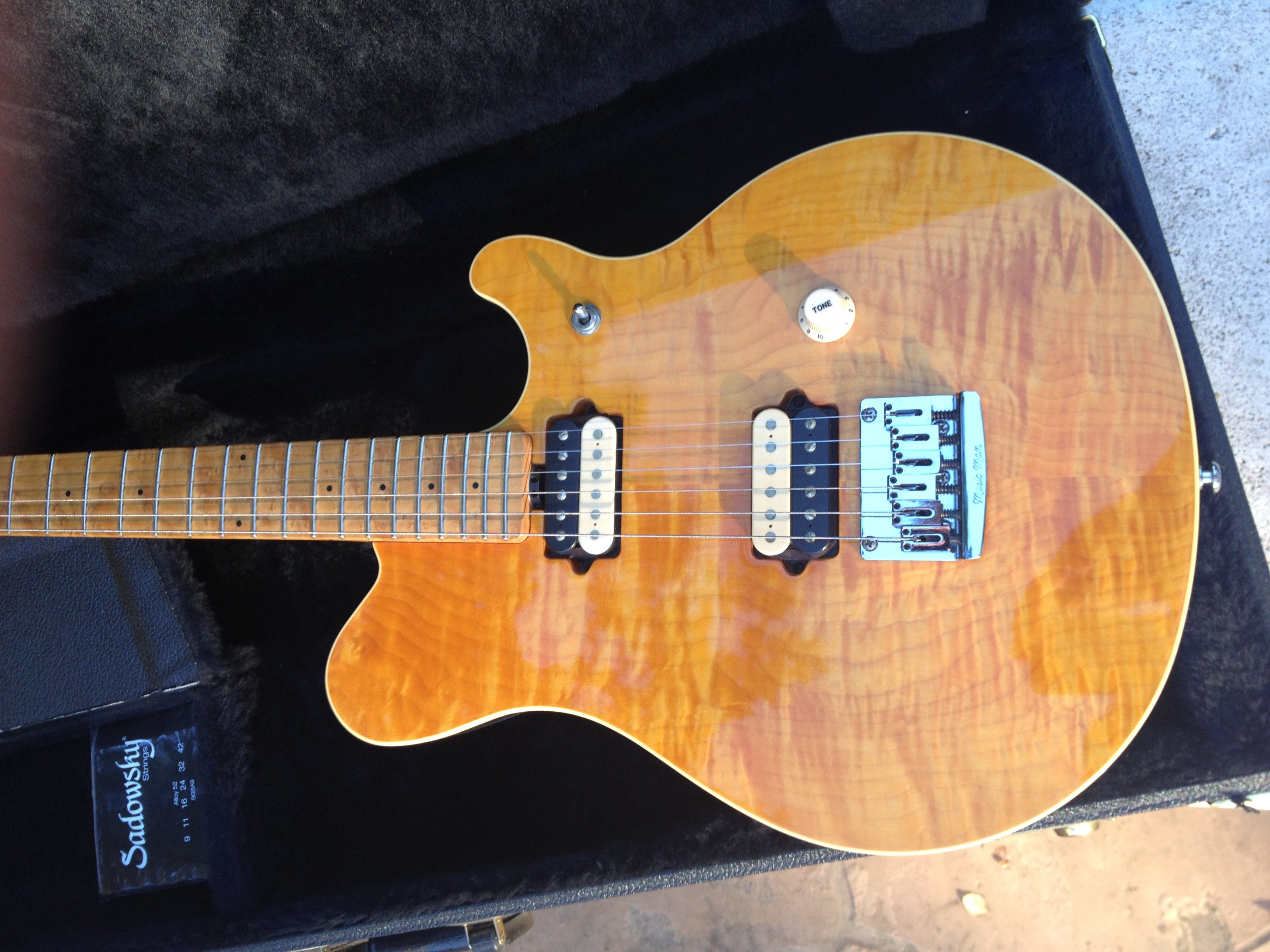
This pickup is in the blonde transparent strat with the cutaway pickguard. I think it sounds somewhat close to the VH1 sound as well, even though it is wired in series.
All things considered, the real VH1 sound is found in a pickup as I originally described. Asymmetric. Parallel.
Plus, I think the guitar is supposed to be homemade and imperfect.
The guitar should fight back a bit if it wants to do EVH. The 1st string even falling off the fretboard, as with those EBMM EVHs. Below, my favorite one, a hardtail, with that high E just getting ready to jump.
For VH1, imperfect brass nut, strange intonation, action a little high.
To my ear, the fight is part of it.
This early look at the Frankenstrat neck - those strings have very little break angle over the nut due to tall tuner posts and no string tree, all to make the strings come back in tune better over that brass nut on bends and trem use.
That’s a fight.
I cannot imagine Randy’s guitars played so great either with all the neck experimentation going on back then.
So, here’s to the fight, and the fun, of it all.
This was a hobby (to de-stress) for me for a couple decades. I have passed it by and am now focused on my writing.
I still build amps and am tweaking the ones I have. That is another rabbit hole.
For now, I am trying to get down what I can about what I have done, my whole EVH pickup saga was a very long, unhealthy and drawn out affair. It ended with the parallel switch on the asymmetric pickup.
And that is that. No, no clips. That would be ego suicide, in all likelihood. Moreso, I have provide the recipe for anyone to try this on their own through their own rigs and hear the differences live.
Live is always best. I never trust tone shootouts or tone tests on Youtube videos.
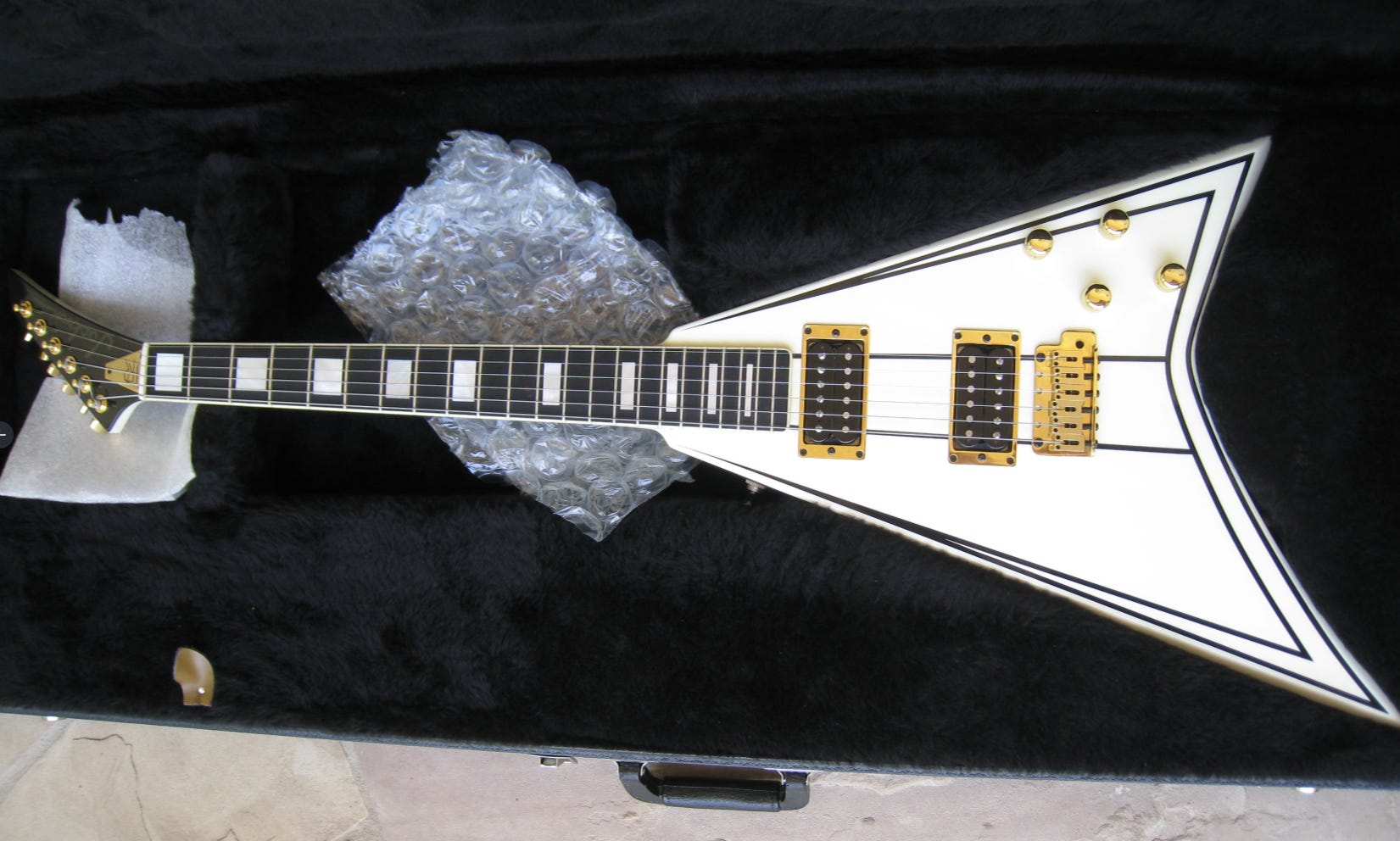
One final pic, this time of my old 1992 Ltd Rhoads. So beautiful. Sounded terrible. Heavy, thin and plinky no matter what I tried. Just not a resonant or musical instrument. But so beautiful, yes.
Until Next Time!
Now back to regularly scheduled programming.
EVH had so much magic in his hands. Even so, chasing down his unique gear and setups is always fun and worthwhile. Happy to see you enjoying the tone chasing Dr. Burry. 🤘🤘🤘
The best substack in the world - stocks and heavy metal! Appreciate you being you, always.